Featured
Table of Contents
Here are 3 typical misunderstandings about regreting that we could think when we consider our own or a person else's means of grieving: One of the most typical mistaken beliefs concerning grieving is that everyone undergoes it similarly. As we've established, regreting is a distinct journey that is different for everybody.
"Moreover, there's no certain order for the phases of despair. Our very first emotional reaction to loss might be temper and anxiety.
And our emotions can come in waves of strength. Many people get frustrated with themselves due to the fact that they assume they're grieving also long.
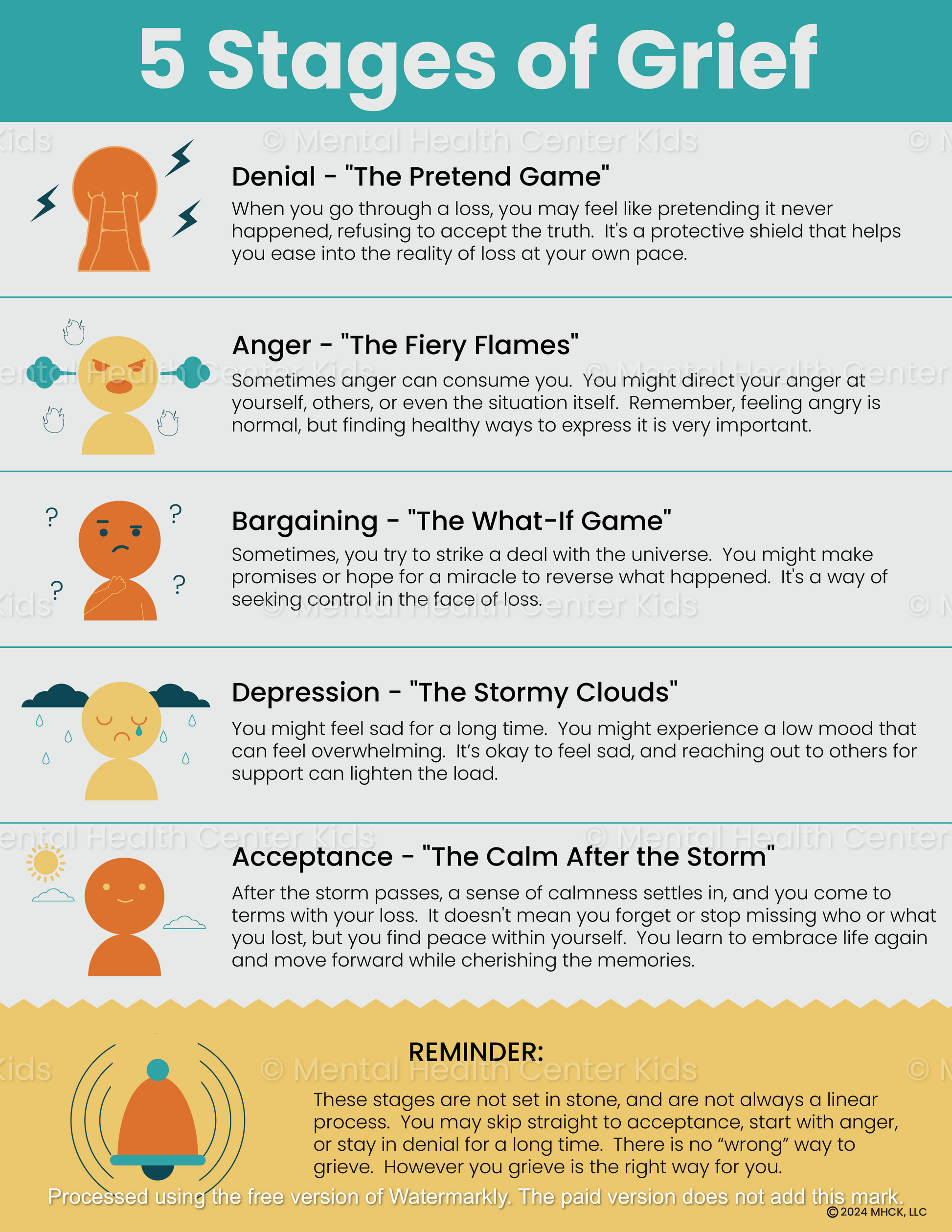
Grief is a complex process that varies from one person to another. The five phases of grief denial, rage, bargaining, clinical depression, and approval are a useful framework for considering sorrow, however it does not imply we'll undergo every phase. We can experience these facets of sorrow at various times, and they don't happen in one certain order.
When Professional Leaders Navigate Mental Health Difficulties
This website uses cookies to help personalise web content, tailor your experience and to keep you logged in if you register. By remaining to utilize this site, you are granting our use cookies.
The seven phases of grief are a template for just how a person might regret. This cyclical framework is indicated to assist you better understand your sensations and is not meant to recommend just how you need to grieve, what you need to be feeling, or in which order. Everybody regrets in different ways. Each phase may come and go or overlap the others.
If you wish to discover more concerning your specific grieving procedure, it's an excellent concept to get to out to a relied on psychological health professional to recognize yourself far better and establish ideal coping strategies. Find out more about the 7 stages of despair. Pain can be a hard and untidy process. When a loss occurs, one of the first points you might experience is shock.
Attachment and Achievement
That's since nobody can ever be absolutely gotten ready for a loss so significant. When you are in shock after a loss, you may act generally or as if nothing has actually occurred. Many of the time, this is due to the fact that your body has not refined the loss. You might seem like the scenario hasn't "sunk in" simply yet.
These sensations and experiences are self-protective systems that function as a barrier so that you are not overwhelmed simultaneously. Because the fatality of an enjoyed one can have such a substantial influence on you, you could experience denial. During this phase of pain, it is simply too hard for your brain to understand that your member of the family, pal, or various other loved one is gone.
Moving Beyond Medical Trauma Through IFS / Parts Work Therapy in Your Area
As you gradually start to accept the loss and what it means for your life now, your denial will certainly start to lessen. You might have a broader series of feelings and feelings when denial wears away. Up until after that, you may have periods when you feel troubled, which can be set off by pointers of your enjoyed one.
In many cases, it's a normal sensation to intend to stay clear of others to ensure that you do not have to acknowledge or review your loss. Sometimes, you feel absent-minded, obtain easily distracted, or hesitate during this phase of despair. You might also try to remain hectic at all times or closed down emotionally.
IFS / Parts Work Therapy for Complex Trauma in High-Achievers
In particular circumstances, you might likewise really feel mad with the doctor, your pals, family members, God, or any type of various other spiritual being(s) you count on. But under all that temper is your discomfort. While it may be uncomfortable to take care of, it offers a lot more framework to your grieving than remaining numb.
Throughout this phase, people often really feel helpless and helpless and ask themselves "what happens if" inquiries. You might feel guilty for not doing more to maintain the loss from occurring or for not spending even more time with the individual you shed. During the negotiating stage, it's common to ask yourself or claim, "I ought to have done this ..." or "If I had only done that ..." While these sorts of doubts are normal, they are not where you desire your thought process to stay.
It might likewise be helpful to do something specific, like compose a letter to your loved one or talk to them out loud. As soon as you come to terms with the fact of the loss, a deeper level of sadness might start to creep in.
You can also visit for a checklist of added resources or call the number listed below to get to Compound Abuse and Mental Health Services Management (SAMHSA) hotline. The testing phase of the mourning procedure frequently includes checking out various things that aid you move onward. In this phase, you are starting to build your new typical along with refining your feelings and emotions created by the loss.
Understanding the Neurological Basis of Perfectionism
Reaching the acceptance phase does not suggest you are alright with what took place. Instead, this component of the grieving process is a lot more regarding approving what your life appears like currently. You will certainly still need to listen to your sensations and change, however you will start to really feel more wholeeven if it looks various than it did before.

Table of Contents
Latest Posts
Connection Methods Gained From Relationship Counseling Create Lasting Change
Coping Practices During Treatment Appointments with Trauma therapy
Overcoming Mental Health Stigma Surrounding Seeking Help
More
Latest Posts
Connection Methods Gained From Relationship Counseling Create Lasting Change
Coping Practices During Treatment Appointments with Trauma therapy
Overcoming Mental Health Stigma Surrounding Seeking Help